
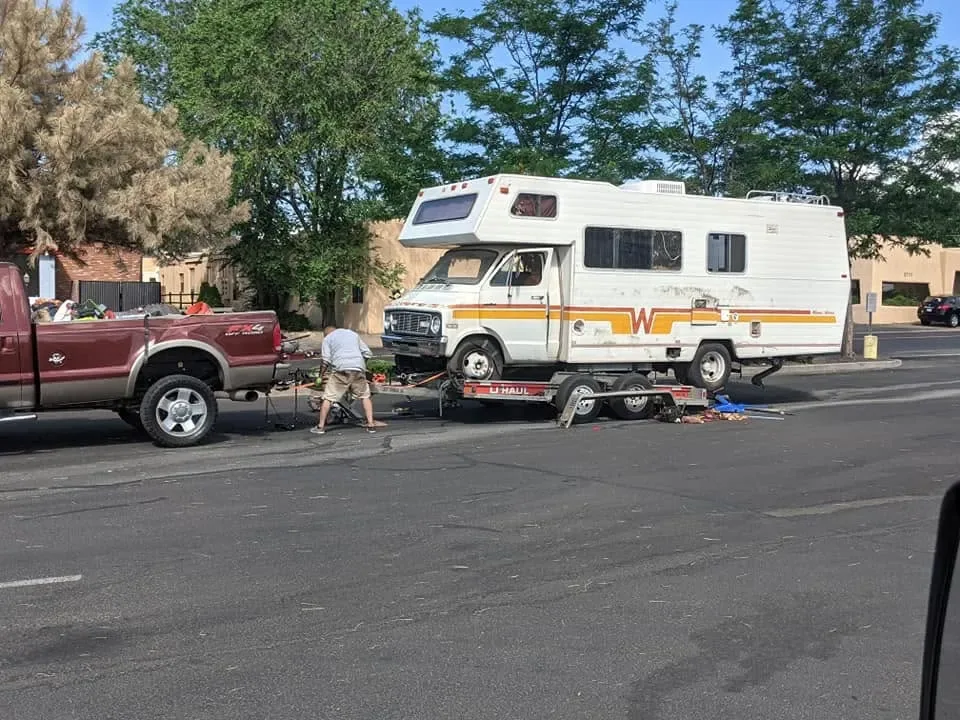
Northern Arizona's grades, canyon roads, and long gaps between towns are hard on RVs. Here is how to prepare before a Grand Canyon or Sedona trip, and what to do if your rig breaks down on the way.
The drive to the Grand Canyon or Sedona is part of the trip: long climbs out of the desert, ponderosa forest around Flagstaff and Williams, and the switchbacks of Oak Creek Canyon. Those same roads put extra strain on an RV's brakes, tires, engine, and cooling system, and services can be far apart once you leave town.
Roadside Repair LLC has helped RV travelers across northern Arizona since 2001, from our base in Flagstaff. Here is what we suggest for a smoother trip.
Before You Go: A Quick RV Check
A few minutes of checking before you leave home can prevent the most common calls we get.
- Tires. Check pressure cold, look for cracks and bulges in the sidewalls, and make sure the spare is inflated and you can reach it. Do the same for a towed vehicle or trailer.
- Brakes. Long downhill grades heat brakes quickly, so make sure they are in good shape before you start.
- Cooling system. Check coolant levels and hoses. Long climbs in summer heat push engines hard.
- Batteries. Test both the chassis and house batteries, especially if the RV has been sitting.
- Fuel and propane. Plan your stops ahead of time, since stations can be far apart outside the main towns.
- Keys. Carry a spare key outside the coach, in case you lock yourself out.
On the Road: Driving Northern Arizona's Grades
The climbs and descents around Flagstaff, on I-17, and through Oak Creek Canyon are where RVs are most likely to have trouble.
- Use lower gears on long descents instead of riding the brakes
- Watch the temperature gauge on long climbs, and pull over safely if it starts to rise
- Give yourself extra room on tight canyon curves and in busy tourist traffic around Sedona
- Expect weather to change with elevation, including cold nights in the high country
If Your RV Breaks Down
If something goes wrong, safety comes first.
- Get as far off the road as you safely can and turn on your hazard lights.
- Set out reflective triangles if you carry them, especially on a curve or a grade.
- Get everyone out of the travel lane and away from traffic.
- Note your exact location: mile marker, direction of travel, the nearest exit or landmark, or a campground or pullout name.
Cell coverage can be limited in parts of northern Arizona, so a mile marker or a landmark is often more reliable than a shared map pin.
What to Tell Us When You Call
RVs carry systems a standard car does not: generators, slide mechanisms, leveling systems, and heavy duty engines. Telling us what kind of rig you have helps us send the right equipment.
- The type of RV: motorhome, fifth wheel, or travel trailer
- What happened: a flat, a warning light, overheating, a strange noise, or a no start
- Whether you are towing a vehicle or trailer
- Whether anyone in your group needs anything urgently
How We Help RV Travelers
Our RV roadside assistance covers flats, dead batteries, lockouts, and fuel delivery wherever you stop. For problems that go deeper, our RV roadside repair technicians diagnose the issue on site and fix it there whenever possible, including trailer repair for fifth wheels and travel trailers. If the rig cannot be repaired where it sits, we help arrange transport.
We answer 24 hours a day, every day of the year, and serve travelers along I-40, I-17, and Route 66, from Flagstaff and Williams to Grand Canyon Village, Tusayan, Sedona, and the Village of Oak Creek.
Stuck on the Way to the Canyon or the Red Rocks?
Call Roadside Repair LLC at (928) 699-0436. Tell us where you are and what your RV is doing, and we will get a technician headed your way so you can get back to your trip.